Body Bag Solutions for Professional Emergency Response and Humanitarian Use
$30.00
Human Crematorium
Body Bag Solutions for Professional Emergency Response and Humanitarian Use
Have questions?
Body Bag Solutions for Professional Emergency Response and Humanitarian Use
Store Link: https://www.haiwos.com/ ***Product Details (***Please Sign In or Login to "My Account". Price is the EXW Factory Term price or send email to us get discount if possible and get shipping cost for delivery by CIF/C&F/FOB term: sales@hiclover.com***) WhatsApp on Mobile: +8613813931455
Body Bag Solutions for Professional Emergency Response and Humanitarian Use
A high-quality Body Bag—also known as a cadaver bag, mortuary bag, or human remains pouch—is an essential piece of equipment for medical facilities, emergency responders, peacekeeping missions, and maritime operations. Modern body bags are engineered to ensure dignified, safe, and efficient handling of deceased individuals under both routine and extreme conditions.
This article highlights the two common load-rated models—Standard 90 kg Body Bag and Heavy-Duty 150 kg Body Bag—and their critical applications in humanitarian, military, maritime, and crisis-response environments.
1. Overview: Reliable and Respectful Handling of Human Remains
A Body Bag is designed to protect the dignity of the deceased while ensuring the safety of personnel. Beyond hospitals and funeral homes, body bags play a vital role in emergency operations including natural disasters, conflict zones, maritime missions, and international peacekeeping deployments.
Professionals rely on body bags not only for practical reasons—such as containment, hygiene, and transport—but also for the humanitarian responsibility of treating every life with respect, even in the most challenging scenarios.
2. Standard and Heavy-Duty Load Ratings
Standard 90 kg Body Bag (General Purpose)
- Suitable for hospitals, clinics, and routine mortuary operations
- Tear-resistant, leak-proof construction
- Typically made from PVC, PEVA, or reinforced polyethylene
- Ideal for general emergency services and routine body transport
- Lightweight and cost-efficient for large-scale storage
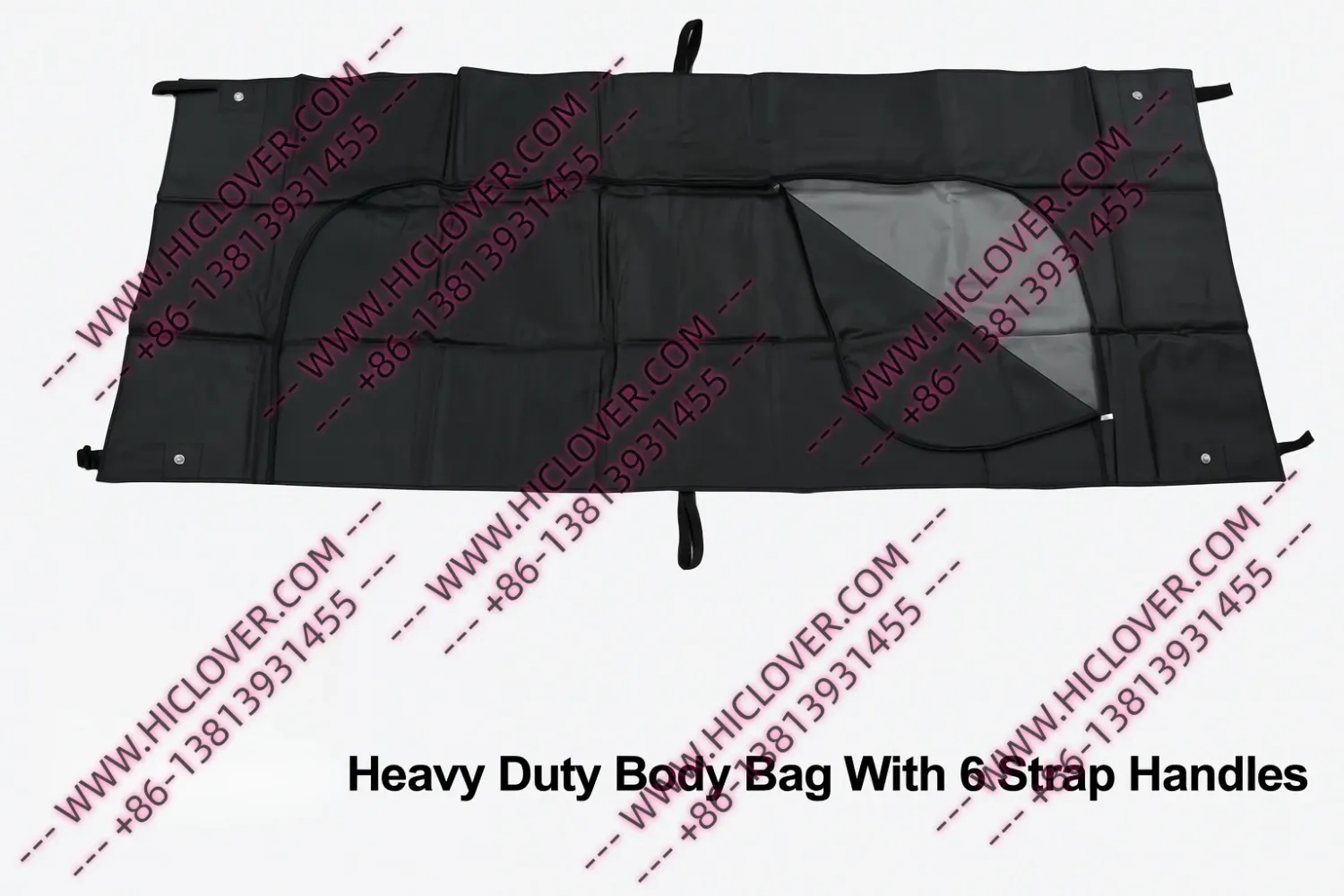
Heavy-Duty 150 kg Body Bag (Reinforced & Military Grade)
- Designed for large-build individuals or extreme environments
- Triple-layer or high-density reinforced materials
- Suitable for disaster zones, military operations, and maritime uses
- Withstands rough handling, long-distance transport, and adverse weather
- Provides maximum durability and safety for high-risk missions
Both categories support zippers, ID windows, and various handle configurations for easier lifting and transport.
3. Key Features of Professional Body Bags
Leak-Proof Sealed Construction
Ensures hygiene and safety in hospitals, conflict zones, and field operations.
Tear-Resistant Reinforced Material
Maintains structural integrity during transport, even in rugged terrain.
UV-Resistant and Weatherproof Options
Critical for outdoor recovery missions, maritime needs, and remote field operations.
Available in Multiple Colors (Black, White, Military Green)
Supports identification standards for hospitals, disaster response units, and military forces.
Optional Anti-Microbial, Odor-Control, and Fire-Retardant Upgrades
Meets diverse safety requirements for different operational environments.
4. Application Scenarios
1. Emergency & Disaster Response
Earthquakes, floods, hurricanes, epidemics, and mass-casualty events require rapid, organized body recovery.
- Easy to deploy at scale
- Maintains hygiene
- Ensures dignity in chaotic conditions
The 150 kg heavy-duty bag is especially valued during disaster-response and humanitarian missions.
2. War Zones and Military Operations
In active conflict areas, body bags must withstand:
- Rough terrain
- Rapid movement
- Long-distance transport
- Harsh weather conditions
Military-grade 150 kg bags provide reliability and honor fallen personnel, preserving dignity throughout evacuation and repatriation.
3. UN Peacekeeping Missions & Humanitarian Operations
Peacekeeping forces (UNPKO), NGOs, and medical relief teams depend on durable body bags for:
- Field hospitals
- Remote coffin-transfer points
- Crisis-management centers
Their use reflects the global commitment to human respect even amid instability and conflict.
4. Maritime and Offshore Applications
Ships, offshore platforms, and long-route vessels must have onboard solutions for unexpected loss of life.
- Salt-resistant materials
- Waterproof sealing
- Long-term storage capability
The 150 kg heavy-duty bag performs reliably in humid, corrosive marine environments.
5. Hospitals, Morgues, and Funeral Services
Standard 90 kg body bags remain essential for routine operations, including:
- Hospital patient handling
- Mortuary preparation
- Transport to funeral homes or cremation facilities
Their stability and ease of use ensure professional workflow and respectful treatment.
5. Humanitarian and Ethical Considerations
Regardless of the environment—war zone, disaster site, or maritime vessel—the primary purpose of a body bag is to protect the dignity of the deceased.
Professionals use body bags to:
- Shield remains from exposure
- Provide privacy during transport
- Uphold cultural and humanitarian values
- Ensure respectful final handling
Even under extreme operational pressure, the right body bag supports the belief that every individual deserves dignity and care.
6. Conclusion
The 90 kg standard body bag and 150 kg heavy-duty body bag form the backbone of global emergency, military, humanitarian, and maritime response systems. Their strength, leak-proof construction, and reliability under stress ensure both operational efficiency and human dignity.
From hospitals and funeral homes to UN peacekeeping missions, war zones, disaster relief operations, and ocean-going vessels, a well-designed body bag is a vital tool that honors life in its final stage while protecting those tasked with caring for the deceased.
Display prices in:USD